Why Dubai Airport Is the Busiest in the World 2026?
Direct Answer: Dubai International Airport is the busiest airport in the world in 2026 because its geographic position as a crossroads between Europe, Asia, and Africa, combined with the hub-and-spoke model of Emirates and flydubai, connects more than 240 destinations across six continents and handles over 90 million international passengers annually.
Introduction
In 2026, global aviation has reached new heights, yet one airport continues to dominate international passenger traffic above all others. Dubai International Airport (DXB) has held the title of the world's busiest airport for international passengers for years, and understanding why Dubai Airport is the busiest in the world 2026 requires looking beyond raw numbers to the strategy behind them.
DXB's success is not accidental. It is the result of a deliberate, multi-layered strategy that combines Dubai's geographic position, an AED 28 billion investment in airport expansion, a national economic vision, and the unique airline model of Emirates and flydubai.
Dubai Airport is the busiest because it sits at the geographic crossroads of East and West, uses the hub-and-spoke model to funnel long-haul traffic through a single point, and benefits from national investment that keeps it ahead of all competitors.
Key Takeaways
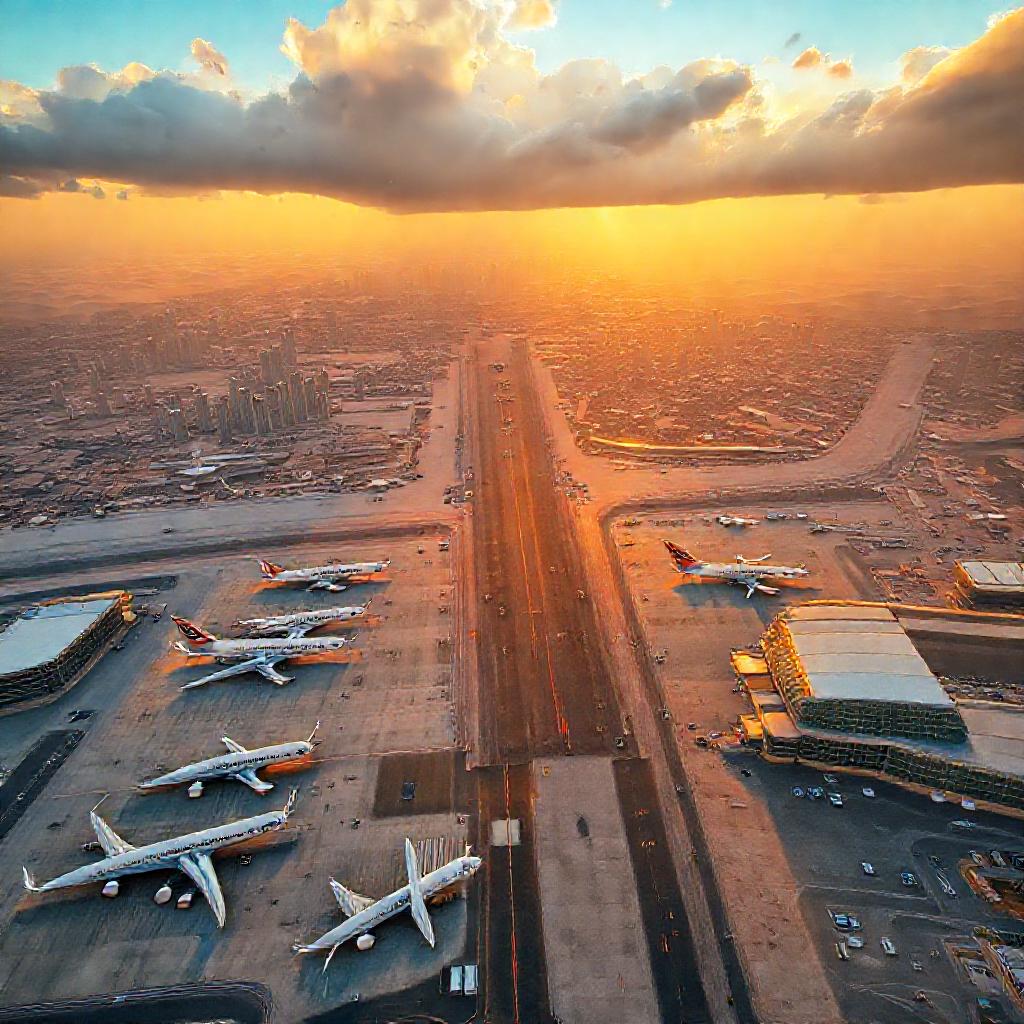
A dramatic aerial view showing DXB's scale, runway activity, and strategic position connecting East and West.
- Dubai's geographic position as a natural crossroads between East and West is the foundation of its aviation dominance.
- The hub-and-spoke model, powered by Emirates and flydubai, funnels long-haul passengers through DXB to a vast global network.
- Dubai's aviation sector is a national economic priority, with sustained investment in capacity, technology, and passenger experience.
- DXB succeeds by converting transit passengers into an "airport as a destination" experience through retail, dining, and amenities.
- Despite growing competition from regional hubs in 2026, Dubai's infrastructure and strategic planning keep it ahead.
The Complete Answer: Why Dubai Airport Is the Busiest in the World 2026
Quick Answer: Dubai International Airport is the busiest airport in the world for international passenger traffic in 2026 because of its geographic position as a global crossroads, the hub-and-spoke model operated by Emirates and flydubai, and sustained national investment in aviation infrastructure.
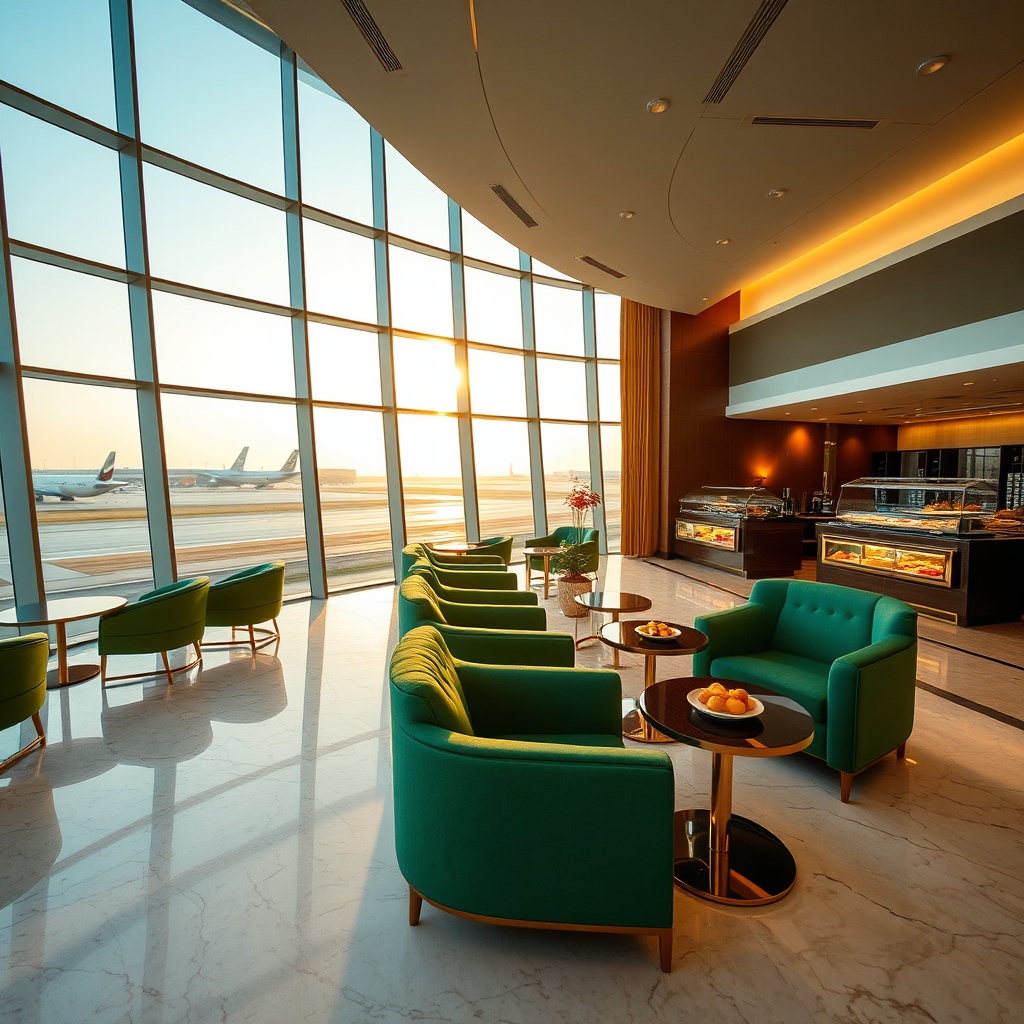
A lively interior scene capturing the premium passenger experience that transforms transit into a destination.
The Core Reason: Geographic Advantage as a Global Crossroads
Dubai sits at a unique geographic intersection. Located between Europe, Asia, and Africa, the city is positioned within an eight-hour flight of roughly two-thirds of the world's population. This makes DXB a natural midpoint for East-West travel, where passengers from Europe heading to Asia, or travelers from Africa going to North America, can connect with minimal detour.
This is not just a matter of distance. The value lies in the time zone advantage — Dubai's location allows airlines to schedule flights that depart in the evening from Europe and arrive in Asia the next morning, or vice versa, minimizing jet lag for passengers. For a global transit hub, this geographic positioning is the single most important asset.
The Role of the Emirates Hub Model
Emirates, the flag carrier of Dubai, is designed around a hub-and-spoke model. Instead of operating many point-to-point routes, Emirates funnels traffic through DXB, where passengers transfer between connecting flights. This allows the airline to serve a vast network of destinations with fewer aircraft than a point-to-point model would require.
Definition: A hub-and-spoke model is an airline network design where flights are routed through a central hub airport, allowing passengers to connect between different routes on a single itinerary.
The result is a "one-stop" solution for travelers between Europe, Asia, Africa, and the Americas. A passenger flying from London to Sydney, or from New York to Mumbai, can connect through DXB with a single transfer. This model is efficient for the airline and convenient for the passenger, creating a steady flow of international traffic through the airport.
The Strategic Factors Driving Record Passenger Traffic at DXB
Connectivity: The 8-Hour Flight Radius
The eight-hour flight radius is the defining geographic metric for Dubai. Within this radius lies a massive share of the world's population and economic centers. This matters more than raw distance because it determines which routes are commercially viable.
Dubai's positioning allows airlines to reach six continents in a single day of coordinated flight schedules. For travelers, this means DXB offers connections to a wider range of destinations than most competing hubs, often with shorter total travel times.
The "One-Stop" Advantage for Long-Haul Travel
For many long-haul routes, a one-stop connection through DXB is faster than the alternatives. Consider a traveler flying from Europe to Southeast Asia. A direct flight may not exist, and a multi-stop itinerary could add hours of travel time. A single connection at DXB, with efficient transfer times and coordinated schedules, often reduces the total journey.
The economic logic is equally strong. Airlines benefit from higher aircraft utilization rates, and passengers benefit from competitive fares made possible by the high volume of traffic. This is why DXB has become a preferred transfer point for long-haul travel.
The Economic and Infrastructure Ecosystem Behind the Numbers
Dubai's Aviation Sector as a National Economic Pillar
Aviation is a cornerstone of Dubai's economic diversification strategy. As the city has moved away from oil dependence, aviation, tourism, and trade have become central pillars of the economy. The government has invested heavily in airport infrastructure, recognizing that a world-class airport drives business, tourism, and logistics.
This is not a private enterprise — it is a national priority. The scale of investment in DXB and the broader aviation ecosystem reflects a long-term strategic commitment that goes beyond short-term commercial returns.
Airport Capacity and Operational Efficiency
Handling record passenger volumes requires more than just runways and terminals. DXB has invested in automated baggage handling systems that process 15,000 bags per hour, rapid aircraft turnarounds, and smart terminal design to maximize throughput. The airport's layout minimizes walking distances, and its baggage handling and transfer systems are built for speed.
Looking ahead, the eventual shift to Al Maktoum International Airport (DWC) in Dubai South is planned as the next phase of capacity expansion. DWC is designed to become a mega-hub with the potential to handle far greater volumes than DXB, though exact timelines and capacities should be verified with official sources.
The Passenger Experience: Why Travellers Choose DXB
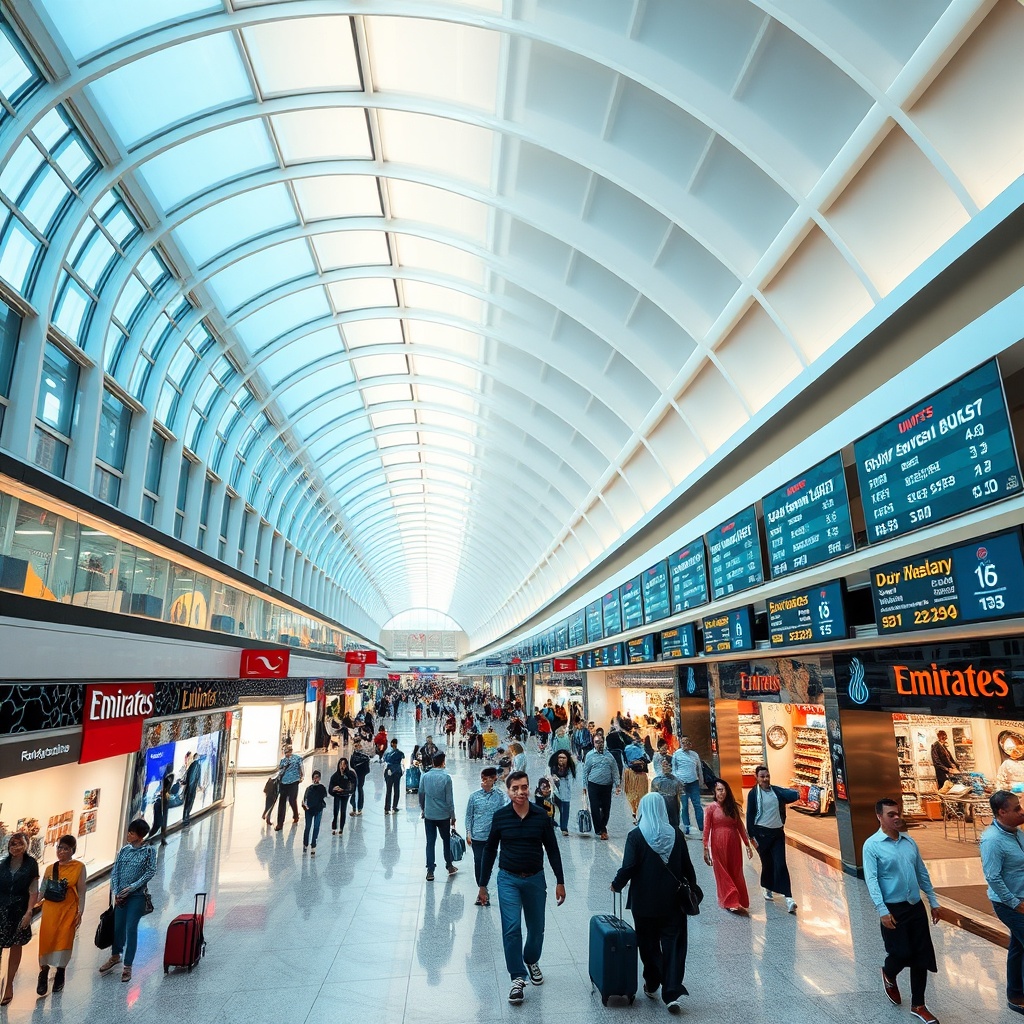
Quick Answer: DXB turns layovers into an experience with extensive duty-free shopping, dining, and amenities, making it a destination in its own right rather than just a transit point.
Duty-Free, Retail, and the "Airport as Destination" Concept
DXB has transformed the airport experience. Beyond gates and runways, the airport is a shopping and entertainment destination in its own right. Duty-free retail, restaurants, lounges, and amenities are designed to make layovers enjoyable rather than tedious.
The psychological appeal is significant. Passengers who have a pleasant experience during a transfer are more likely to choose DXB again. For transit passengers, a few hours at DXB can feel like a stopover rather than an inconvenience.
Seamless Connectivity with Emirates and flydubai
The operational integration between Emirates and flydubai is a key advantage. Both airlines operate from DXB, and their schedules and systems are coordinated to allow seamless transfers. This partnership expands the network significantly — Emirates covers long-haul routes while flydubai serves regional destinations.
For passengers, this means simpler itineraries and more connection options. The two airlines also offer stopover packages that encourage travelers to spend time in Dubai, turning a layover into a mini-vacation.
The Competitive Landscape: How DXB Compares to Other Major Hubs
Comparison Table: DXB vs. Doha (DOH) vs. Istanbul (IST) vs. London (LHR)
| Metric | DXB | DOH | IST | LHR |
|---|---|---|---|---|
| International passenger volume | Consistently ranked #1 for international traffic | Strong regional competitor | Major Europe-Asia bridge | Leading transatlantic hub |
| Number of destinations served | Extensive global network via Emirates and flydubai | Broad network via Qatar Airways | Wide coverage across Europe and Asia | Dense European and transatlantic network |
| Key airline | Emirates | Qatar Airways | Turkish Airlines | British Airways |
| Strategic advantage | East-West crossroads | Similar geographic positioning | Europe-Asia bridge | Transatlantic hub |
Doha's Hamad International Airport shares a similar geographic advantage to Dubai, but DXB's larger scale and longer established hub model give it an edge. Istanbul benefits from its position as a bridge between Europe and Asia, while London Heathrow remains dominant in transatlantic traffic. In 2026, all four airports compete for connecting passengers, but DXB's combination of geography, infrastructure, and airline model keeps it ahead.
The Shifting Dynamics of Global Aviation in 2026
The aviation landscape in 2026 is shaped by post-pandemic recovery, regional conflicts, and fluctuating fuel costs. These factors affect hub strategies differently. Some hubs have struggled with airspace restrictions, while others have benefited from rerouted traffic.
Dubai's model remains resilient because it is built on a broad, diversified network rather than reliance on any single region. When one corridor faces disruption, traffic can be re-routed through other parts of the network. This flexibility is a key reason DXB maintains its lead.
The Future Outlook: Will Dubai Remain the Busiest Airport?
Quick Answer: Dubai's future aviation plans center on expanding DXB and transitioning to Al Maktoum International Airport, which is designed to become the city's mega-hub with capacity for far greater passenger volumes.
Upcoming Expansions and Capacity Projects
Dubai is not standing still. Planned expansions at DXB and the transition to DWC are designed to ensure the city can handle future growth. DWC is envisioned as the future mega-hub, with capacity for significantly more passengers than DXB. Exact timelines and capacity figures should be verified with official announcements, as project schedules can change.
Potential Challenges: Climate, Geopolitics, and Competition
Dubai faces real challenges. Extreme heat can affect aircraft performance and increase operational costs. Regional instability can disrupt airspace and travel demand. Aggressive competition from other Gulf hubs, particularly Doha, continues to intensify.
Dubai is mitigating these risks through investment in technology, diversification of routes, and continued marketing of Dubai as a destination. The city's long-term planning is designed to absorb shocks that would destabilize less diversified hubs.
Step-by-Step: How Dubai Airport Maintains Its Global Lead
- Continuous investment in terminal infrastructure and technology to increase capacity and efficiency.
- Deepening airline partnerships to expand the network and fill seats across a broader range of routes.
- Optimizing the passenger journey through streamlined customs, baggage handling, and transfer processes.
- Marketing Dubai as a destination to encourage longer layovers and stopovers that boost passenger numbers.
- Adapting to global trends in aviation, including sustainability initiatives and digitalization of airport services.
FAQ
Is Dubai Airport really the busiest in the world in 2026?
Yes. Dubai International Airport has consistently ranked as the world's busiest airport for international passenger traffic, and it retains this position in 2026. Its status is based on official passenger traffic data that measures international arrivals and departures.
What makes Dubai Airport a global hub?
Three factors combine: its geographic position as a crossroads between East and West, the hub-and-spoke airline model operated by Emirates and flydubai, and sustained government investment in aviation infrastructure.
How does Dubai Airport handle so many passengers?
Through automated baggage handling systems that process 15,000 bags per hour, rapid aircraft turnarounds, smart terminal design, and efficient transfer systems. The airport is designed to minimize walking distances and speed up baggage handling and customs processes.
Which airlines operate the most flights from DXB?
Emirates is the dominant carrier at DXB, with flydubai as the second major operator. Together, they provide a vast network of connections across six continents.
Will Dubai Airport stay the busiest in the future?
The outlook is positive. Planned expansions and the transition to Al Maktoum International Airport are designed to handle future growth. However, competition from other Gulf hubs and external challenges could affect the ranking over time.
Conclusion
Dubai International Airport is the busiest in the world in 2026 because of a deliberate strategy that combines geography, airline network design, national investment, and a focus on passenger experience. It is not a coincidence — it is the result of decades of planning and execution.
Looking ahead, Dubai's ability to adapt to competition, climate challenges, and shifting global dynamics will determine whether it remains at the top. The transition to DWC and continued investment in the aviation ecosystem suggest that Dubai intends to stay ahead.
For travelers, Dubai's airport is more than a transit point. It is a global connector that symbolizes the city's ambition to be at the center of world trade, tourism, and movement.