The Complete Answer: Emirates vs Flydubai — Which One Should You Choose?
Emirates vs Flydubai is a common comparison among travelers passing through Dubai, but the two airlines serve very different purposes. Emirates is a full-service, global premium airline, while Flydubai is a low-cost, regional carrier based in Dubai. They are not direct competitors on most routes because they cater to different needs — and often connect passengers through the same hub.
Quick Answer: Emirates is a full-service premium airline for long-haul travel, while Flydubai is a low-cost regional carrier. They share a parent company and a codeshare agreement, so the right choice depends on your route, budget, and comfort preferences.
Key Takeaways
- Emirates and Flydubai are sister airlines based in Dubai, but they operate on different models and route networks.
- The choice between them is largely determined by your route, budget, and desired level of comfort.
- They codeshare, so you can book a single itinerary that combines both airlines for connections through Dubai.
- Flydubai is generally cheaper for short-haul, but Emirates includes more services and amenities in the base fare.
- Check baggage allowances and total trip cost before booking, as the cheapest advertised fare may not be the cheapest overall.
Who Should Fly Which Airline
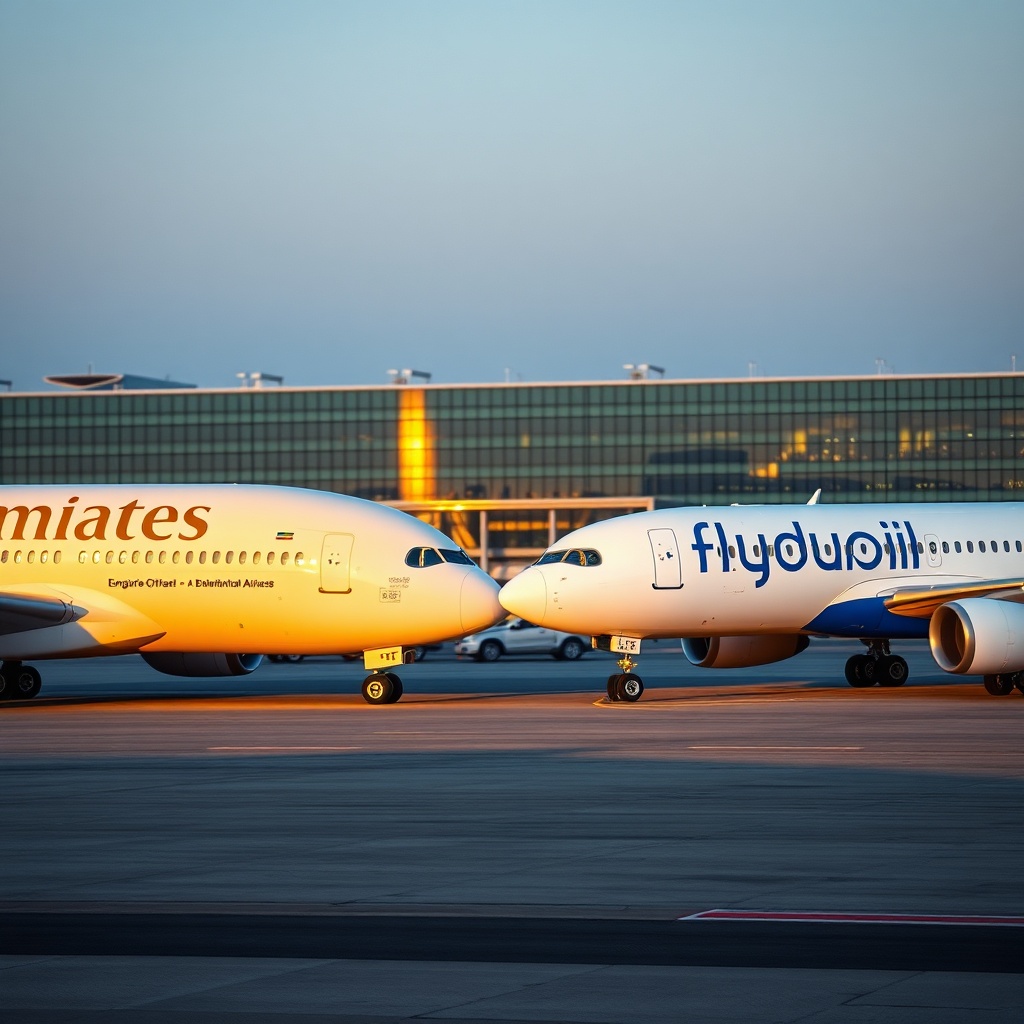
A side-by-side view of the two sister airlines at their Dubai hub.
Choose Emirates if you want long-haul comfort, premium cabins, extensive entertainment, and a global network. It works best for intercontinental travel, business trips, and special occasions where the experience matters as much as the destination.
Choose Flydubai if you want affordable short-haul flights, direct regional connections, and no-frills efficiency. It works best for quick trips within the Middle East, Africa, Asia, and parts of Europe where price and schedule are the main priorities.
Consider both if you are flying via Dubai and need a connecting itinerary. A Flydubai regional flight can feed into an Emirates long-haul flight on a single ticket, which simplifies the connection and protects your luggage.
Comparison Table: Emirates vs Flydubai at a Glance
| Feature | Emirates | Flydubai |
|---|---|---|
| Airline model | Full-service premium | Low-cost, value-focused |
| Primary route type | Long-haul international | Short-haul regional |
| Cabin classes | First, Business, Premium Economy, Economy | Business, Economy |
| Typical baggage allowance | Generous included allowance | Basic fare excludes checked baggage |
| Loyalty program | Emirates Skywards | Emirates Skywards (shared) |
| Codeshare with other | Yes, including Flydubai | Yes, including Emirates |
| Best for | Comfort, long-haul, premium travel | Budget, short-haul, regional travel |
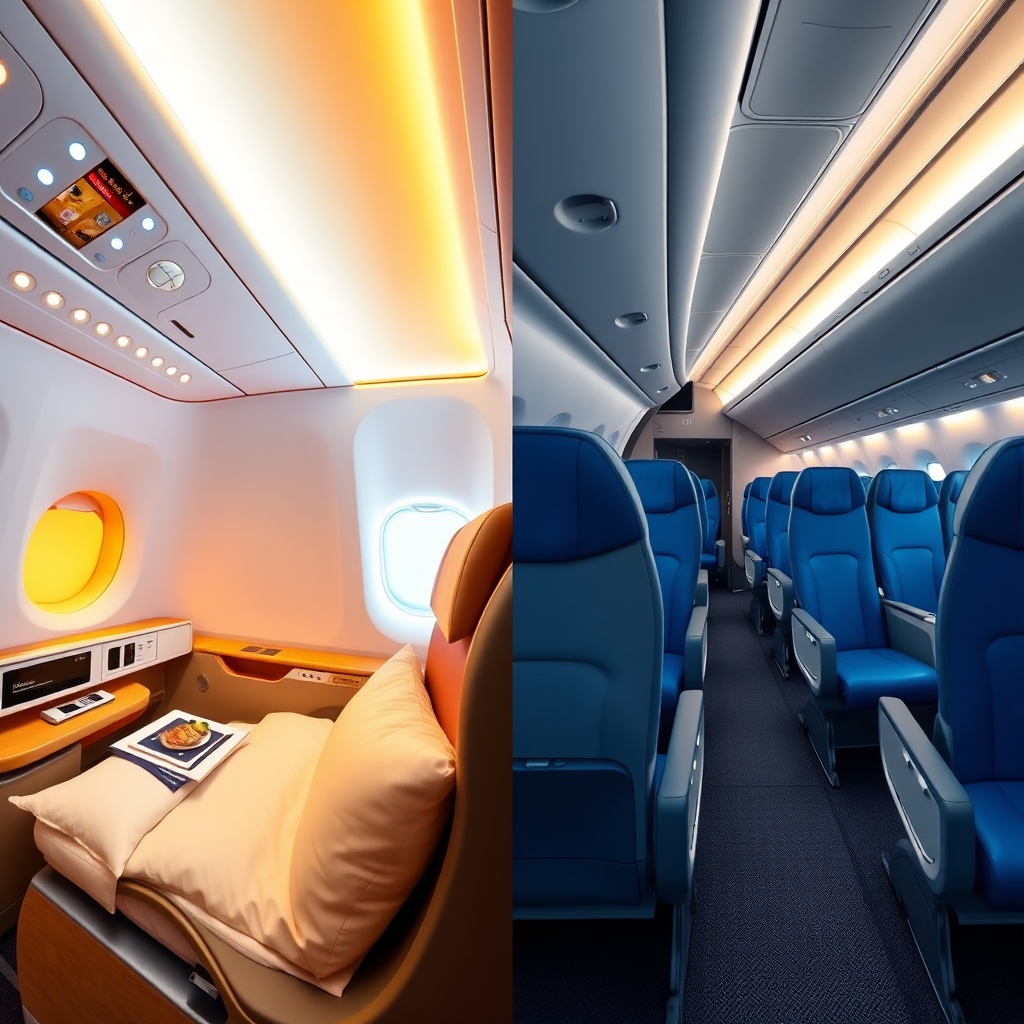
A visual comparison of the onboard experience offered by the two airlines.
Fleet, Routes, and Network: Where They Fly and On What
Fleet Size and Aircraft Types
Emirates operates a large wide-body fleet made up of Airbus A380 and Boeing 777 aircraft. These planes are built for long-haul travel, with larger cabins, more storage, and the ability to carry more passengers and cargo over long distances.
Flydubai operates an all-Boeing 737 fleet. These narrow-body jets are efficient for shorter sectors, allowing the airline to serve smaller airports and regional destinations that wide-body aircraft cannot reach economically.
The fleet difference explains much of the Emirates vs Flydubai price difference. The A380 and 777 cost more to operate, but they deliver a more spacious and comfortable experience. The 737 keeps Flydubai's costs down, which supports lower base fares.
Route Network and Destinations
Emirates flies to destinations across six continents, with a strong focus on long-haul routes connecting Dubai to major global cities. Its network is designed for point-to-point long-haul travel and connecting itineraries through Dubai.
Flydubai focuses on regional and mid-range routes across the Middle East, Africa, Asia, and Europe. Its network covers many cities that Emirates does not serve, especially smaller secondary airports that are closer to city centers.
There are some overlapping routes where both airlines compete directly. On these shorter sectors, the choice often comes down to price versus service. For a Dubai to London flight comparison, Emirates is the relevant long-haul option, while Flydubai concentrates on shorter regional destinations.
Definition: A codeshare agreement is a partnership between airlines that allows them to sell seats on each other's flights under their own flight numbers, enabling a single ticket for connecting itineraries.
The Passenger Experience: From Check-in to Landing
Cabin Classes and Seat Comfort
Emirates offers a full range of cabins, including First, Business, Premium Economy, and Economy. The premium cabins feature lie-flat seats, direct aisle access, and a high level of privacy. Even Economy seats are designed with long-haul comfort in mind.
Flydubai offers a simpler Business and Economy configuration. Its Business class seats are comfortable for short-haul flights, but they do not match the lie-flat luxury of Emirates' long-haul product. Economy seats are standard narrow-body seats with limited recline.
Seat comfort is a key differentiator. On a long-haul flight, the difference between Emirates' spacious seats and Flydubai's standard seats matters a great deal. On a two-hour regional flight, it matters much less.
In-Flight Entertainment, Meals, and Amenities
Emirates is known for its ice entertainment system, which offers a huge selection of movies, TV shows, music, and games in every cabin. Meals are multi-course and served on real tableware, and Wi-Fi is available on most flights with free options in some classes.
Flydubai offers a more limited entertainment selection, with a smaller screen and fewer on-demand options. Wi-Fi is available for a fee, and meals are either buy-on-board or included depending on your fare. On a short regional flight, this is a practical trade-off for a lower price.
The practical impact is clear: Emirates is designed for hours of entertainment and dining, while Flydubai is built for efficient, no-frills travel between nearby cities.
Baggage Allowance and Additional Fees
Emirates typically includes checked baggage in all fares, with the allowance depending on your route and cabin class. This is a significant convenience for long-haul travelers who need to bring more than a carry-on.
Flydubai's basic fares exclude checked baggage. You must pay for checked bags, seat selection, and sometimes even a standard meal. These Flydubai checked baggage fees can add up quickly if you are not prepared.
To avoid surprise fees at the airport, always check the fare rules before booking. On Flydubai, adding baggage and seat selection during booking is usually cheaper than paying at the airport.
Pricing, Value, and Loyalty: What You Actually Pay For
Fare Structures and Pricing Models
Emirates pricing is typically higher, but the base fare includes a generous baggage allowance, meals, and entertainment. You pay more upfront, but the total cost is predictable.
Flydubai pricing is lower upfront, but it uses a low-cost model with add-ons. The advertised fare is often just the seat, and everything else costs extra. This is the core of the Emirates vs Flydubai price difference.
Quick Answer: Flydubai usually looks cheaper upfront, but once you add checked baggage, seat selection, and meals, the total cost can approach an Emirates fare. Always compare the final price, not just the base fare.
Hidden Costs and Total Trip Value
The cheapest advertised fare is not always the cheapest overall. A Flydubai fare that excludes baggage, a seat, and a meal can become more expensive than an Emirates fare that includes all of them.
To understand the true value, compare the total cost of your trip, not just the ticket price. Consider what is included in each fare and what you would actually use. If you need a checked bag and a meal, Emirates may offer better value even if its base fare is higher.
Loyalty Programs: Emirates Skywards
Both airlines use the same loyalty program, Emirates Skywards. This means you can earn and redeem Emirates Skywards miles on Flydubai flights and vice versa. For frequent flyers, this is a major advantage because it makes the two airlines complementary rather than competing.
If you fly Flydubai for regional trips and Emirates for long-haul, your miles accumulate in one account. This can help you reach reward flights faster and simplifies your loyalty strategy.
Step-by-Step: How to Compare the Total Cost of a Flydubai vs Emirates Trip
- Identify your exact travel dates and route.
- Search for the base fare on both airlines.
- Add the cost of checked baggage, seat selection, and meals on Flydubai.
- Add any applicable taxes and fees for both airlines.
- Compare the final total price and factor in the difference in included services.
The Codeshare Partnership: How Emirates and Flydubai Work Together
What the Codeshare Means for Booking
You can book a single itinerary that includes flights on both airlines through the Emirates or Flydubai website. The Emirates and Flydubai codeshare agreement allows this, so you get one ticket and one booking reference for a journey that combines a regional flight with a long-haul flight.
This is especially useful if you are starting in a smaller regional city and connecting through Dubai to a global destination. Instead of managing two separate bookings, you have a single, protected itinerary.
Quick Answer: Yes, you can book a single itinerary combining Emirates and Flydubai flights through their codeshare agreement, with baggage checked through to your final destination.
Baggage Transfer and Connection Experience
When flying a codeshare itinerary, baggage is typically checked through to your final destination. You do not need to collect your bags and re-check them in Dubai, which saves time and reduces stress.
Emirates operates from Terminal 3 at Dubai International Airport, while Flydubai's main base is Terminal 2. When connecting between the two airlines, you may need to transfer between these terminals, so allow enough time for immigration, security, and the terminal change.
When to Use the Codeshare vs Booking Separately
The codeshare is best for long-haul connections between a Flydubai regional flight and an Emirates international flight. It provides a single ticket, through-checked baggage, and protection if you miss a connection.
Booking separately may be cheaper, but it risks missing connections and requires self-transfer of baggage. If your first flight is delayed, you may be responsible for the cost of the second flight. The codeshare is usually the safer choice for connecting itineraries.
Booking and Travel Tips: How to Get the Best Deal
When to Book Each Airline
For Emirates, booking early is generally the best strategy for long-haul flights, especially if you want a specific seat or a premium cabin. Fares tend to rise as the departure date approaches.
For Flydubai, watch for seasonal promotions and consider flexible dates to find lower fares. The airline frequently runs sales on regional routes, so it pays to check prices across a few weeks before committing.
How to Build a Connecting Itinerary Through Dubai
Use the codeshare to combine a Flydubai regional flight with an Emirates long-haul flight. This gives you the convenience of a single booking while taking advantage of Flydubai's regional coverage and Emirates' global reach.
Ensure your connection time is sufficient for immigration, security, and terminal changes. A minimum of two to three hours is a reasonable guideline for connections through Dubai, though the exact time depends on your arrival and departure terminals.
Tips for Avoiding Extra Fees
On Flydubai, add baggage and seat selection during booking to save money compared to airport prices. The online rates are lower, and you avoid the risk of paying a higher fee at the counter.
On Emirates, check if your fare includes checked baggage and choose a fare that matches your needs. If you are traveling light, a lower fare without baggage may be sufficient, but for most long-haul trips, the included allowance is worth the extra cost.
FAQ: Emirates vs Flydubai
Is Flydubai owned by Emirates?
Yes, Flydubai is a subsidiary of The Emirates Group, and the two airlines share a parent company. This relationship enables their codeshare partnership and shared loyalty program.
Can I use Emirates Skywards miles on Flydubai flights?
Yes, Emirates Skywards is the loyalty program for both airlines, and miles can be earned and redeemed across both. You can use miles for award flights on either carrier.
Do Emirates and Flydubai fly to the same destinations?
They have some overlapping destinations, but Emirates has a much larger global network while Flydubai focuses on regional routes. Emirates serves long-haul destinations on six continents, while Flydubai covers many regional cities that Emirates does not.
Is Flydubai cheaper than Emirates?
Generally, Flydubai has lower base fares, but the total cost can be higher once baggage, meals, and seat selection are added. Always compare the final price, including all add-ons, before booking.
Can I book a single ticket with both Emirates and Flydubai?
Yes, through their codeshare agreement, you can book a single itinerary that includes flights on both airlines, with baggage checked through to your final destination. This is the best option for connecting through Dubai.
Related reading: Dubai Airport Flights: 2026 Schedules & Transit Tips · How Long Are DXB Terminal 3 Transfer Times?
Conclusion
The Emirates vs Flydubai decision comes down to route, budget, comfort, and connection needs. Emirates is the premium choice for long-haul travel and comfort, while Flydubai is the value choice for short-haul and regional travel.
If you are planning a long intercontinental journey, Emirates offers more space, better entertainment, and included services. If you are taking a short regional trip, Flydubai delivers efficiency and lower upfront prices.
For connecting itineraries through Dubai, use the codeshare to combine both airlines on a single ticket. Before booking, use the comparison table and step-by-step cost check to understand the total price, not just the advertised fare. That way, you can choose the airline that truly fits your trip.